
Newsletter Subscribe
Enter your email address below and subscribe to our newsletter
Enter your email address below and subscribe to our newsletter

 ByJohn A
Electrical systems need a reliable path for fault current so that protective equipment can detect abnormal conditions and disconnect affected equipment. In some power networks, the system itself does not provide a suitable neutral connection for this purpose. A grounding transformer can be installed to create that connection and establish a controlled path to ground.
Grounding transformers are commonly used in medium-voltage distribution systems, industrial facilities, renewable energy installations, and substations. Their purpose is different from that of a conventional power transformer. Rather than primarily supplying power to a load, a grounding transformer helps establish the desired relationship between the electrical system and earth.
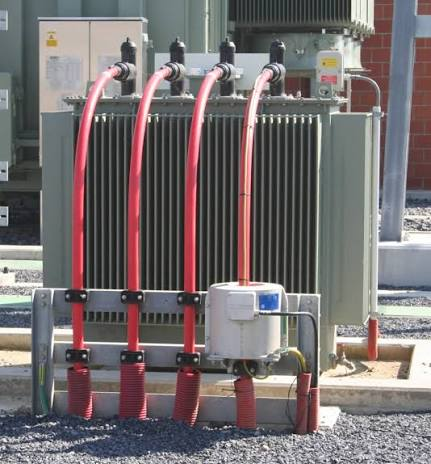
A grounding transformer is an electrical transformer designed to provide a neutral point for a power system that otherwise does not have one.
It is particularly useful in systems with delta-connected or otherwise ungrounded sources. By creating a neutral connection, the transformer allows the system to be grounded through an appropriate grounding arrangement.
Two common grounding transformer configurations are:
The appropriate configuration depends on the system voltage, grounding method, fault-current requirements, and network design.
A power system can operate normally without a direct connection to earth under certain configurations. However, a fault involving one phase and ground can create unpredictable voltage conditions if the system does not have a defined grounding path.
A properly designed grounding system helps control these conditions.
When a ground fault occurs, the grounding transformer provides a path for zero-sequence current. Protective equipment can then detect the fault and operate according to the protection scheme.
Without a suitable grounding arrangement, fault detection can become more difficult, and temporary overvoltages may place additional stress on insulation and electrical equipment.
The operation depends on the transformer’s winding arrangement.
A zig-zag transformer contains specially arranged windings that allow the three phases to produce a neutral point. Under balanced operating conditions, the magnetic effects within the transformer largely cancel.
During a ground fault, however, the winding arrangement provides a path for zero-sequence current.
A wye-delta grounding transformer works differently. The wye-connected side provides a neutral point that can be connected to ground through the selected grounding impedance. The delta winding provides a circulating path for certain components of the fault current.
The specific design is selected according to the requirements of the electrical network.
A grounding transformer does not necessarily connect the system directly to earth with zero impedance. In many installations, an impedance is placed between the transformer neutral and ground.
This can be a resistor or reactor, depending on the grounding method.
The purpose is to control the magnitude of ground-fault current. Excessive fault current can damage equipment, while insufficient fault current may make protection systems less effective.
The grounding system therefore needs to provide a controlled and predictable fault-current level.
Industrial facilities often have complex electrical networks containing motors, variable-frequency drives, generators, transformers, and sensitive control equipment.
A grounding transformer can be used where the electrical system configuration does not naturally provide an accessible neutral.
The grounding arrangement can help establish predictable fault behavior and provide a reference between the system and earth.
Industrial engineers may also need to consider harmonics, motor loads, generator operation, and coordination between different protective devices when designing the grounding system.
Renewable energy projects can also require dedicated grounding arrangements.
Solar farms, wind installations, battery energy storage systems, and other power-generation facilities may use electrical configurations that require a specific method of grounding.
The grounding transformer can provide the required neutral reference and support the operation of ground-fault protection.
The exact arrangement depends on the inverter, generator, collector system, transformer configuration, and interconnection requirements.
A grounding transformer should not be confused with a conventional power transformer.
A power transformer is primarily intended to transfer electrical power between voltage levels. Its KVA or MVA rating is generally based on the continuous load it is expected to supply.
A grounding transformer, by contrast, is primarily associated with system grounding and fault-current management. It may carry relatively little continuous load but must be capable of handling the required fault current for the specified duration.
This difference affects how the transformer is designed and rated.
Selecting a grounding transformer requires an understanding of the complete electrical system.
Engineers may evaluate:
The grounding transformer should be coordinated with circuit breakers, relays, grounding resistors or reactors, surge protection, and other system components.
Although grounding transformers may not carry significant continuous load, they still require inspection and maintenance.
Maintenance can include checking electrical connections, insulation condition, grounding connections, enclosure condition, and any associated resistor or reactor.
Thermal inspections can help identify abnormal heating at connections. Testing of the grounding system can also verify that the expected electrical characteristics remain within the required limits.
The maintenance schedule should follow the manufacturer’s recommendations and the requirements of the electrical installation.
Not every electrical system needs a separate grounding transformer. Its use depends on the configuration of the network and the grounding method selected by the system designer.
A dedicated grounding transformer becomes particularly useful when a system needs a neutral reference but the existing source or transformer arrangement does not provide one.
By creating a defined grounding point and providing a controlled path for fault current, the transformer can support the operation of protective equipment and help manage abnormal voltage conditions.
The correct design depends on the system’s voltage, fault-current requirements, protection scheme, and operating conditions. Proper coordination between the grounding transformer and the rest of the electrical network is essential for reliable system performance.
